
Still deciding whether Teeth Whitening will work for you?
It's a fair question, and one we hear almost every day. Most people who sit down with us have spent months — sometimes years — feeling a little self-conscious about the colour of their teeth, but they hold back from doing anything about it because they're not convinced the treatment will make a real difference for them specifically. Maybe you've tried a few whitening toothpastes that promised a lot and delivered very little. Maybe a friend had their teeth done, came back glowing, and now you're quietly wondering whether your own smile is simply too far gone.
So let's be honest with you from the start.
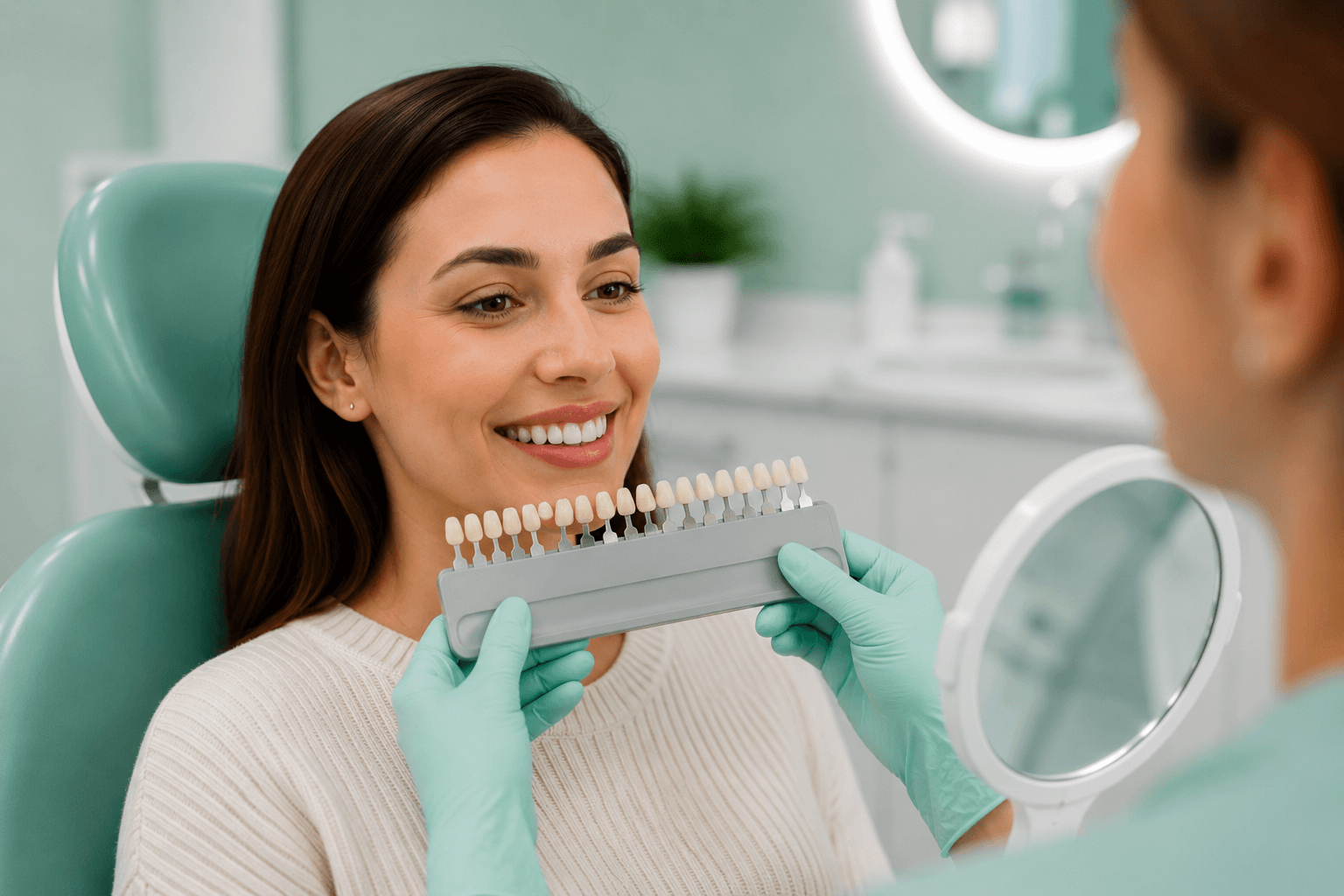
The only reliable way to know how much lighter your smile can go is to measure it against a professional shade guide before anything begins. We hold the guide up against your teeth, note your current shade, and talk you through a realistic target. There's no guessing and no vague promises. You'll know roughly where you're starting and where you can expect to land, and most people are genuinely surprised at how much of a shift is possible in a single visit. If you're still weighing up whether to proceed, you can read Should I visit a dentist before getting laser whitening for more guidance.
The before-and-after results on this page come from people with very ordinary starting points — years of coffee, the odd glass of red, a bit of natural yellowing that crept in with age. None of them had "perfect" teeth to begin with. That's rather the point. Teeth Whitening isn't about starting from perfection. It's about lifting away the staining that's built up over time and bringing back the shade you probably had years ago without even realising it.
We put this page together because we know that reading about a treatment and seeing it are two very different things. It's easy to be sceptical of a description on its own — anyone can claim their results look impressive. Photographs of real, everyday cases tend to answer the question far better than any amount of writing can. So if you're on the fence, take a proper look through the results below. Then read on, because the more you understand about how the treatment actually works, the easier it becomes to picture your own result.
Before and After Teeth Whitening — real results
The images in this section show the difference a single Teeth Whitening session can make across a range of everyday cases. Nothing here is exaggerated. Lighting is kept consistent between the "before" and "after" shots so you're seeing an honest comparison rather than a clever camera trick.
Coffee and tea staining: Before and after Teeth Whitening results showing yellow-brown coffee and tea staining lifted to a noticeably brighter, whiter shade. If you want more examples of this kind of transformation, you can see https://coventry.lateethwhitening.co.uk/before-after-laser-teeth-whitening-results/.
Long-term smoker: Before and after Teeth Whitening results on a long-term smoker, with heavy surface staining reduced and the teeth appearing several shades lighter.
Age-related yellowing: Before and after Teeth Whitening comparison showing natural age-related yellowing brightened to a fresher, more youthful shade.
General everyday staining: Before and after Teeth Whitening results on general dietary staining, showing a visibly cleaner and brighter smile after one session.
Red wine and dark drinks: Before and after Teeth Whitening results showing dulling from red wine and dark drinks lifted to a brighter, more even shade.
Look closely and you'll notice something the photographs have in common: the change isn't just about "whiteness." Teeth look cleaner, healthier, and more even. That's usually what people are really after — not a blinding, artificial glare, but the natural brightness that got buried under years of ordinary life.
Why teeth stain in the first place
Before you can judge whether whitening will work for you, it helps to understand why teeth lose their brightness at all. Staining isn't random, and it isn't a sign that you've neglected your teeth. It's simply the result of everyday life leaving its mark, and knowing where it comes from makes the whole idea of reversing it far less mysterious.
There are broadly two kinds of staining, and they behave quite differently.
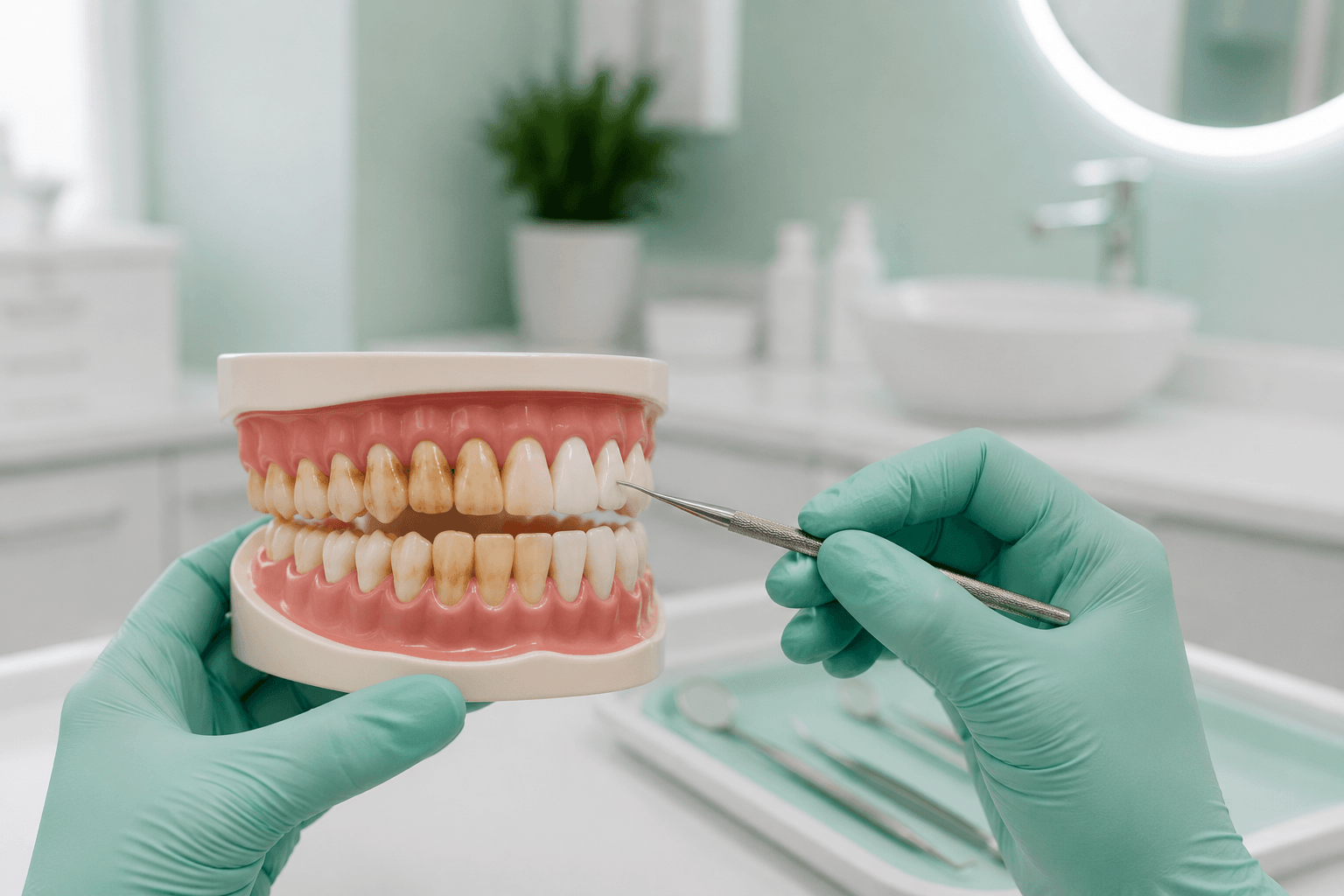
The first is surface staining, sometimes called extrinsic staining. This is the layer that builds up on the outside of the enamel from the things you eat, drink, and do. Coffee, tea, red wine, dark sauces, and tobacco are the usual culprits, and they work in much the same way a favourite mug picks up a brown ring over time. This kind of staining sits on and just below the surface, which is exactly why it tends to respond so well to professional whitening.
The second kind runs deeper, within the tooth itself — intrinsic staining. This can come from the natural colour you were born with, from ageing, from certain medications taken in childhood, or occasionally from an old injury to a tooth. Deeper discolouration is more stubborn by nature, and while whitening can still lift and brighten it, the change may be more gradual than it is with straightforward surface staining.
Age plays its own quiet role too. Enamel naturally thins a little over the years, and the layer beneath it — dentine, which is more yellow to begin with — starts to show through more. That's why teeth tend to look warmer and duller as we get older, even in people who have never touched a cup of coffee in their lives.
None of this is anything to feel bad about. It's simply what happens when teeth do their job, day in and day out, for decades. The reassuring part is that the most common cause of a dull smile — surface staining from ordinary food and drink — is also the kind that responds best to treatment.
Why consider Teeth Whitening
The reasons people give for wanting whiter teeth are rarely dramatic. They're small, everyday things that quietly add up.
Someone catches themselves in a photo and instinctively closes their mouth on the next one. A person going for interviews wants to feel a bit more polished. A groom or bride wants to look their best on a day that's going to be photographed from every angle. Plenty of people simply notice that their smile doesn't match how they feel — they're healthy and looking after themselves, yet their teeth have started to look tired.
There's also the confidence side of it, which is harder to measure but very real. When you're not thinking about your teeth, you smile more freely. You laugh without covering your mouth. You hold eye contact a fraction longer. None of that is vanity — it's just what happens when a small worry stops taking up space in your head.
Teeth Whitening tends to appeal to people who don't want anything invasive done. There's no drilling, no reshaping, and nothing permanent altered about your natural teeth. You're simply lifting away staining that has settled into the surface and slightly below it. For a lot of people, that feels like a sensible, low-commitment way to freshen up their smile without changing anything else about how they look.
How the treatment works
If you've never had it done, the process is far simpler and more comfortable than most people expect.
A session usually takes around an hour from start to finish. You're awake the whole time, sitting back in the chair much as you would for a routine check-up. There are no needles and no anaesthetic involved, because Teeth Whitening works on the surface and just beneath it rather than doing anything to the structure of the tooth.
Here's roughly how a visit runs from beginning to end.
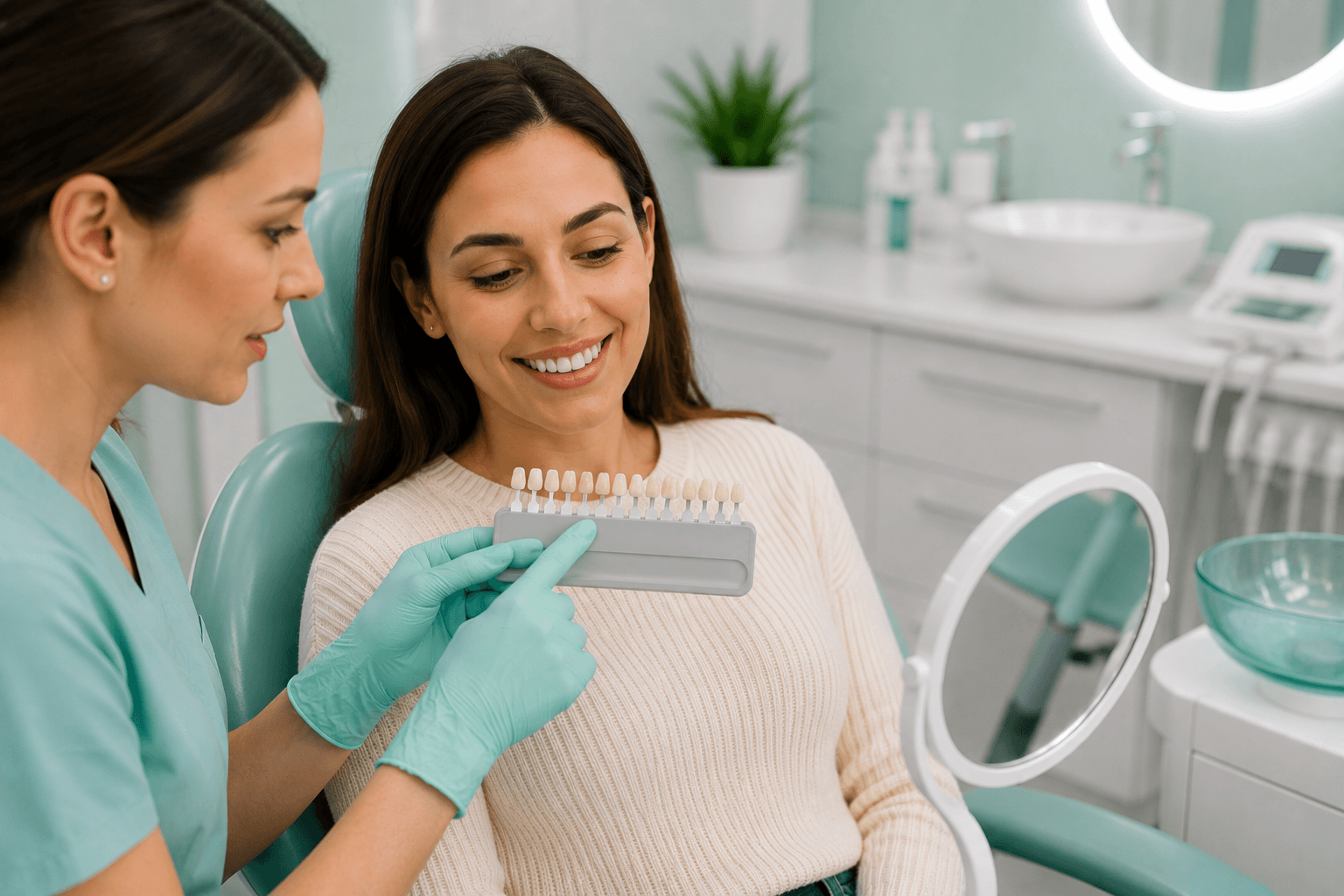
First, we check your shade. Before anything is applied, we compare your teeth to a professional shade guide and record where you're starting. This is the baseline that lets you see the difference clearly at the end, and it's the honest reference point for the whole session. Without it, "whiter" is just a feeling; with it, you can see exactly how far you've come.
Next, your lips and gums are protected. A barrier is placed so the whitening gel stays on the teeth, where it's meant to be, and away from the soft tissue. This part is quick, but it makes the experience far more comfortable and keeps the gel working where it counts.
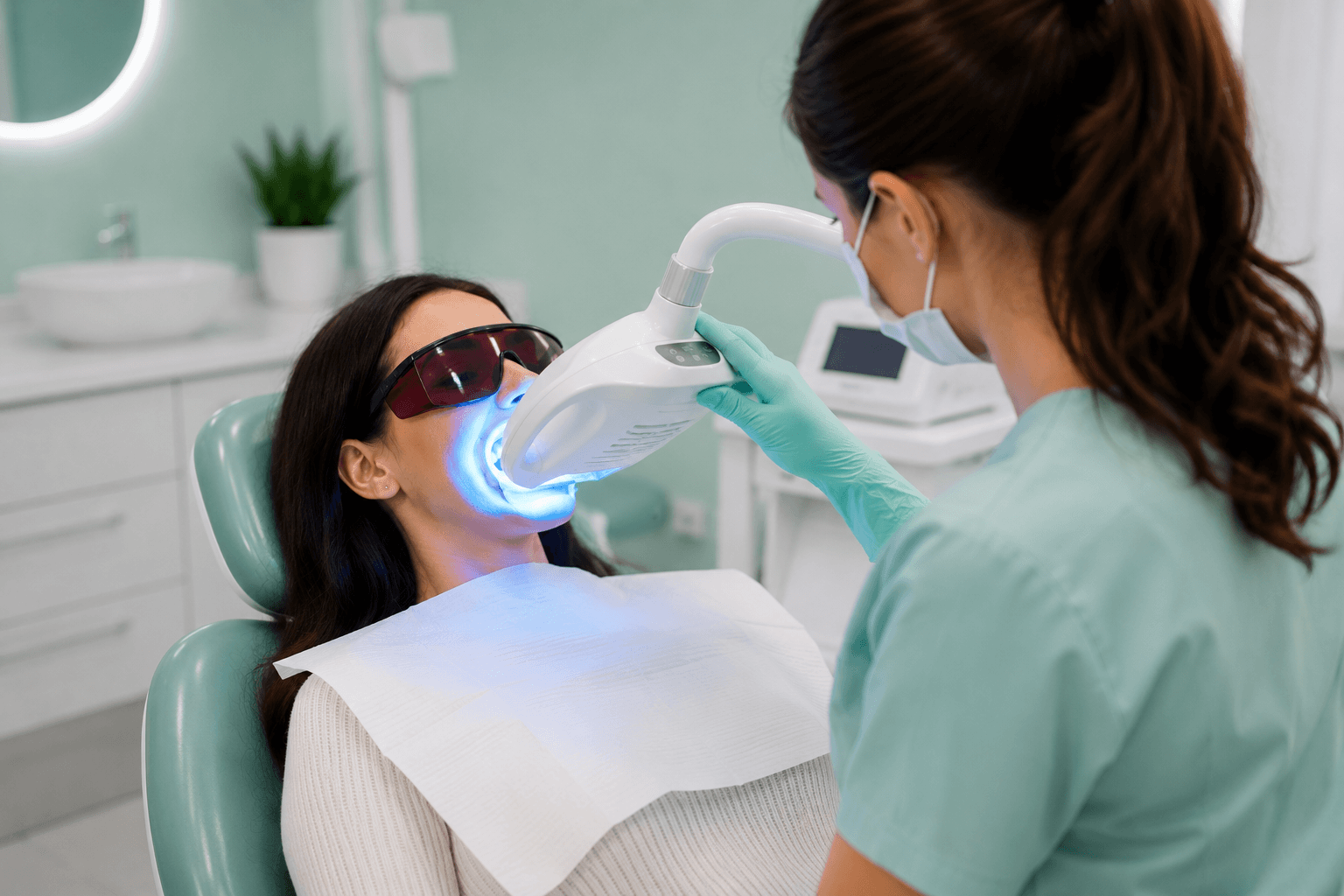
Then the gel goes on. A whitening gel is applied evenly across the teeth that show when you smile. The gel is what actually breaks down the staining that's built up over the years, gently loosening the discolouration from the enamel.
A light activates it. Once the gel is in place, a specialised light is directed at the teeth. The light speeds up the whitening reaction, which is what allows a meaningful change to happen within a single session rather than over weeks. This is repeated for a few short rounds, and the gel is refreshed between them so it stays effective throughout.
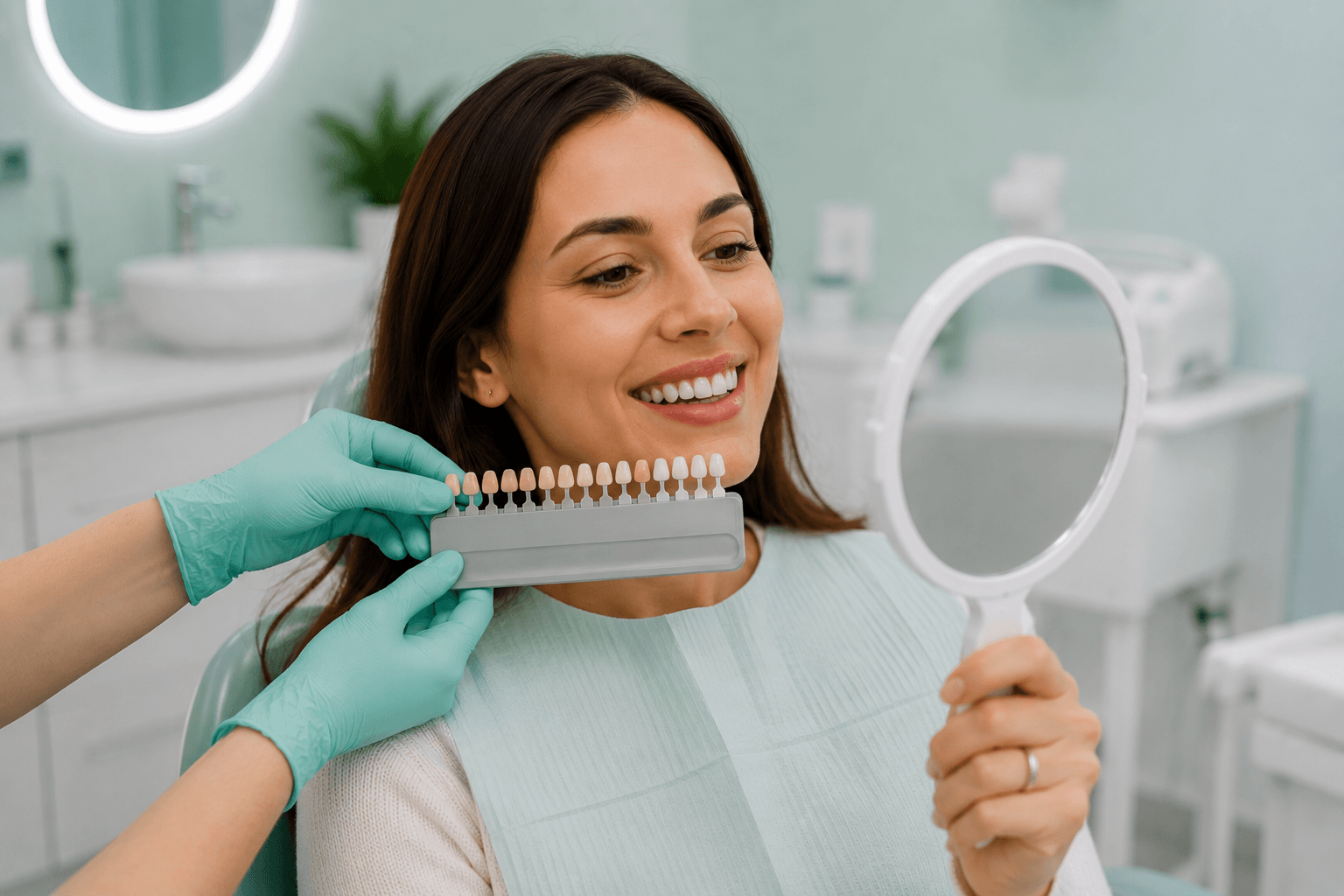
Finally, we compare against the shade guide again. At the end, we hold the guide back up so you can see exactly how many shades you've moved. This is the moment most people reach for a mirror and it's usually where the scepticism they walked in with quietly disappears.
Throughout, the treatment is designed to be gentle. Some people feel nothing at all. Others notice a bit of mild sensitivity, particularly if their teeth were sensitive to begin with, and that usually settles within a day or so. We'll always talk you through what to expect based on your own teeth rather than reciting a one-size-fits-all script.
What to expect at your first visit
Walking into any treatment for the first time can feel a little uncertain, so it helps to know how a first visit tends to unfold. There are no surprises waiting for you, and the pace is relaxed rather than rushed.
The visit usually begins with a proper conversation rather than the treatment itself. This is your chance to explain what's been bothering you about your smile, ask anything that's on your mind, and get an honest sense of what's realistic. We'll look at your teeth, check the general health of your gums, and note anything worth discussing existing dental work, sensitivity, or areas of heavier staining.
This is also the moment we measure your current shade against the guide. Seeing your starting point recorded matters more than you might expect, because it turns a vague hope ("I'd like whiter teeth") into something concrete you can actually track.
If everything looks straightforward, treatment can often go ahead there and then. If there's something that needs attention first — a bit of gum trouble, say, or a tooth that needs looking at we'll be upfront about it and suggest sorting that out beforehand, simply because it's the sensible order of things. Whitening is at its best on a healthy mouth.
The whole first visit is as much about you feeling comfortable and informed as it is about the treatment itself. Nobody should feel pushed. A good result starts with understanding what's involved, and that begins with a calm, honest conversation.
What results to expect
This is where honesty matters most, so we'll set clear expectations rather than overselling.
Results are measured in shades on a professional guide, and most people move several shades lighter in a single session. Some move a little less, some a good deal more. The size of the change depends on a handful of factors, and it helps to understand them before you start so your expectations line up with reality.
Your starting shade. Teeth that are heavily stained often show the most dramatic-looking difference, simply because there's more built-up staining to lift. Teeth that are already fairly light will still improve, but the "before and after" gap looks more subtle for the obvious reason that there was less to remove in the first place.
The type of staining. Surface staining from food and drink tends to respond very well. Deeper discolouration — the kind that's tied to age, certain medications, or the natural colour you were born with — can be more stubborn and may lift more gradually over time.
Your natural tooth colour. Everyone has an underlying tooth shade, and whitening lifts away the staining to reveal a brighter version of your own natural colour. It doesn't turn every set of teeth the same shade of white, and it isn't meant to. The goal is your teeth at their brightest, not someone else's teeth.
Any existing dental work. This is an important one. Whitening gel works on natural tooth enamel. It does not change the colour of crowns, veneers, bonding, or fillings. If you have visible dental work at the front, your natural teeth around it will lighten while the restorations stay the same shade they always were. We'll point this out beforehand so there are no surprises.
One thing worth saying plainly: the result you see straight after treatment often settles slightly over the following day or two as the teeth rehydrate. This is completely normal, and the shade you're left with is your true, stable result rather than a temporary flash of brightness that fades away. If anything, most people find they only really appreciate the difference once it has settled and they've caught their reflection a few times without expecting to.
Common cases we see
Everyone's teeth tell a slightly different story. Below are some of the most common starting points people bring to us, and what tends to happen with each.
The long-term coffee or tea drinker
If your day is measured in cups, your teeth have almost certainly picked up staining along the way. Coffee, black tea, and similar dark drinks are some of the most common causes of that dull, yellowed look. The good news is that this kind of dietary staining usually responds beautifully, because it sits on and near the surface where the treatment does its best work. People in this group are often the ones most taken aback by their result, because they'd quietly assumed the staining was simply permanent.
The smoker or ex-smoker
Smoking leaves behind some of the most stubborn surface staining there is — that deep yellow-brown tinge that toothpaste barely touches. Whitening can make a real difference here, lifting away a good deal of that built-up discolouration and leaving the teeth looking noticeably cleaner and lighter. Results vary depending on how long-standing the staining is, and we'll always give you a realistic idea beforehand rather than an inflated one.
Age-related yellowing
Teeth naturally darken and yellow a little as the years go by. It happens so gradually that most people don't notice until they compare an old photo with a recent one. This kind of yellowing responds well to whitening, and the effect can be quietly rejuvenating — a fresher, more youthful smile without changing anything else about your face.
Red wine and other dark drinks
Red wine is a well-known culprit, along with dark fruit juices and cola. These leave behind a dulling, uneven tint over time. Whitening lifts that away and evens things out, and the difference tends to be most obvious around the parts of the teeth that see the most contact.
Getting ready for a wedding or big event
A surprising number of people come to us with a date circled on the calendar — a wedding, a milestone birthday, a graduation, a job interview, or simply a holiday where they know there'll be plenty of photos. There's nothing vain about wanting to look your best for a day that matters. For occasions like these, it's worth allowing a little time beforehand rather than leaving it to the last minute, so your shade has settled and you feel completely comfortable when the day arrives.
Returning after previous whitening
Whitening isn't a one-off event set in stone, and plenty of people come back after having it done before — sometimes months later, sometimes years. Life carries on, coffee gets drunk, and staining gradually creeps back. A refresh top-up is a common and perfectly normal reason to return, and there's no need to feel you've "failed" to maintain anything. Keeping a bright smile is an ongoing thing rather than a single fix.
Professional Teeth Whitening compared with home options
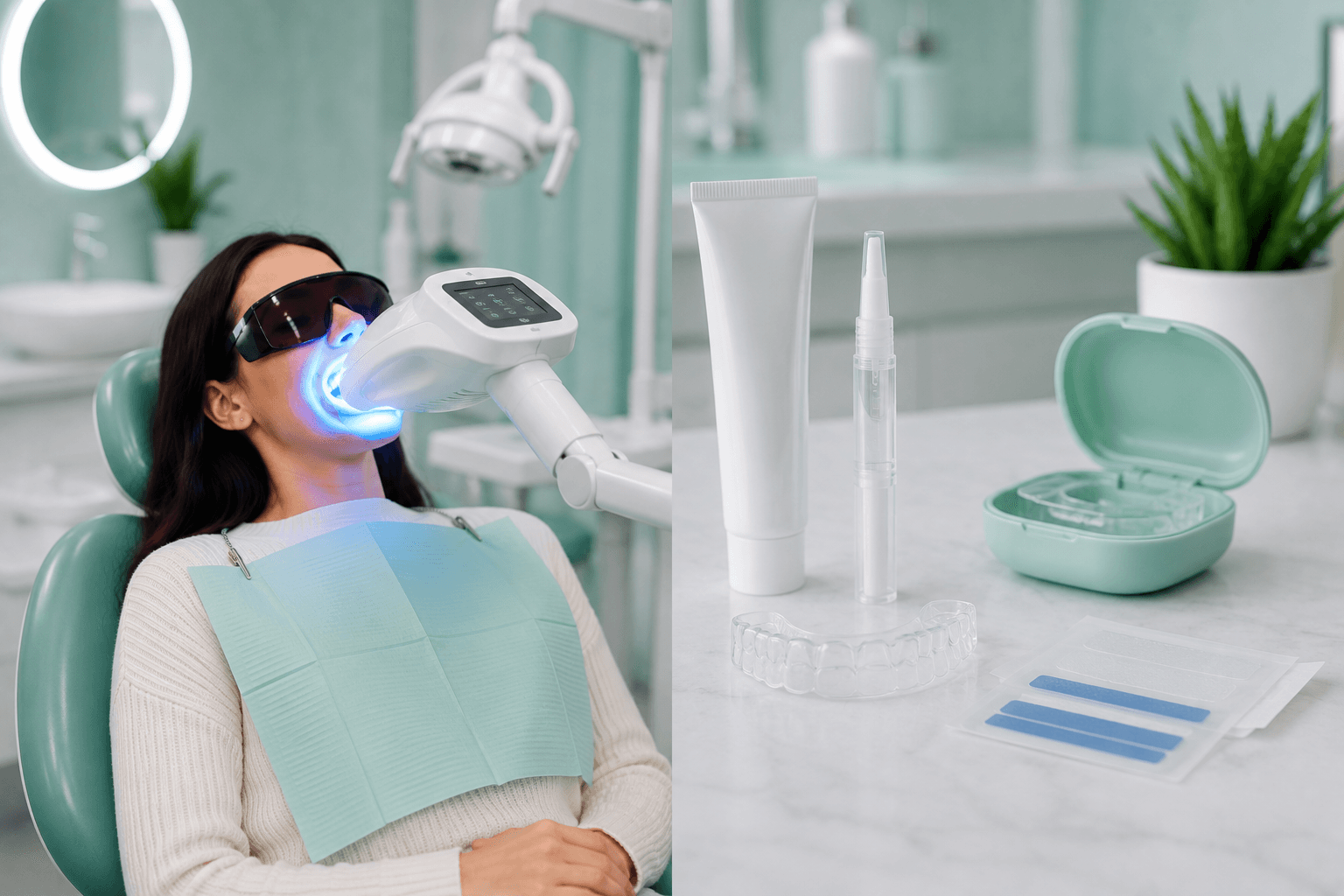
If you've spent any time looking into whitening, you'll know the shelves are full of options — whitening toothpastes, strips, pens, trays, and kits of every kind. It's worth understanding how these compare with having Teeth Whitening carried out professionally, not to dismiss them, but so you can make an informed choice.
Whitening toothpastes are the gentlest option of all. They work mainly by using mild abrasives to scrub away some surface staining, and they can help keep results looking fresh once you've had them. What they generally can't do is make a dramatic change to the underlying shade of your teeth, because they don't contain the same active ingredients working in the same way.
Home kits and strips sit somewhere in the middle. Some can produce a noticeable change over several weeks of consistent use. The trade-offs tend to be time, consistency, and control. Trays that aren't shaped to your teeth can let the gel spread unevenly, which sometimes leads to patchy results or a little irritation, and it's easy to lose momentum partway through a lengthy course when you're doing it alone at home.
Professional Teeth Whitening differs mainly in three ways: the process is carried out by trained hands, your gums are properly protected throughout, and the change happens within a single session rather than being spread over weeks. Because someone is watching over the whole process and checking your shade against a guide, there's far less guesswork about where you'll end up and far less chance of an uneven result.
There's no single "right" answer for everyone, and the best choice depends on how much change you're after and how much time you're willing to put in. What matters most is understanding the differences honestly, so that whatever you choose, you're choosing it with your eyes open.
Common myths about Teeth Whitening
Few treatments attract as many myths as tooth whitening, and some of them put people off unnecessarily. Let's clear up a few of the most common ones.
"Whitening will damage my enamel." This is probably the most persistent myth of all. Professional whitening is designed to lift staining without harming the structure of the tooth. The temporary sensitivity some people feel afterwards is exactly that — temporary — and not a sign that any damage has been done.
"It will make my teeth blindingly, unnaturally white." Whitening reveals a brighter version of your own natural shade rather than painting your teeth a uniform, artificial white. The results on this page look clean and healthy rather than fake, which is what most people are actually hoping for.
"The results only last a week or two." With sensible aftercare, results last far longer than this. How long depends on your habits — a heavy coffee drinker who smokes will see staining return sooner than someone who's careful — but a fortnight is a considerable underestimate.
"Whitening toothpaste does exactly the same thing." As covered above, whitening toothpaste helps maintain results and remove some surface staining, but it works quite differently and can't achieve the same shift in overall shade.
"If I have a crown or a filling, whitening is pointless." Not so. Whitening still brightens all of your natural teeth. It's true that it won't change the colour of dental work, which is worth planning around, but that's a reason to have a conversation first rather than a reason to give up on the idea altogether.
Understanding what's true and what isn't tends to take a lot of the anxiety out of the decision, and leaves you free to weigh it up on the facts.
Is Teeth Whitening right for you?
Most healthy adults are suitable, but it's sensible to think through a few things first rather than assume.
Whitening tends to suit you well if your discolouration comes mainly from food, drink, smoking, or age, and if your teeth and gums are generally healthy. If you're mostly bothered by surface staining, you're likely to be pleased with the outcome.
There are a few situations where it's worth pausing for a proper conversation before booking anything in.
If you have a lot of visible dental work at the front — crowns, veneers, or bonding on the teeth that show when you smile — it's important to understand that those won't change colour. Whitening might actually make the difference between your natural teeth and your restorations more noticeable, so this is something to weigh up and discuss first.
If your teeth are very sensitive, whitening can sometimes make that sensitivity flare up temporarily. It doesn't rule you out, but it's something we'll take into account and manage carefully.
If you have untreated dental problems — a cavity, gum trouble, or a tooth that's been bothering you — it's usually best to get those looked at first. Whitening a mouth that needs other attention isn't the right order of things.
It's also generally advised to wait if you're pregnant or breastfeeding, simply as a matter of caution rather than any proven risk, and whitening is intended for adults rather than children.
None of this is meant to put you off. It's just the honest checklist a responsible provider should run through with you, so that you go into treatment with clear eyes and come out happy with the result.
Preparing for your session
There's very little you need to do to get ready for a whitening session, but a few small things can help you get the most from it.
In the day or two beforehand, it's worth being a little mindful of heavily staining foods and drinks, simply so you're starting from as clean a baseline as possible. Keeping up your normal brushing routine helps for the same reason — you want the treatment working on your teeth, not on a layer of the day's coffee.
If you know your teeth tend to be sensitive, it's worth mentioning this in advance so it can be taken into account. Some people find that switching to a toothpaste made for sensitive teeth in the run-up to their appointment takes the edge off any sensitivity afterwards.
Beyond that, there's no need for anything elaborate. Turn up, settle into the chair, and let the treatment do its work.
Keeping your results looking their best
Whitening isn't strictly permanent, because the same things that stained your teeth in the first place are still part of daily life. The reassuring part is that keeping your results looking fresh is mostly about a few simple habits rather than anything demanding.
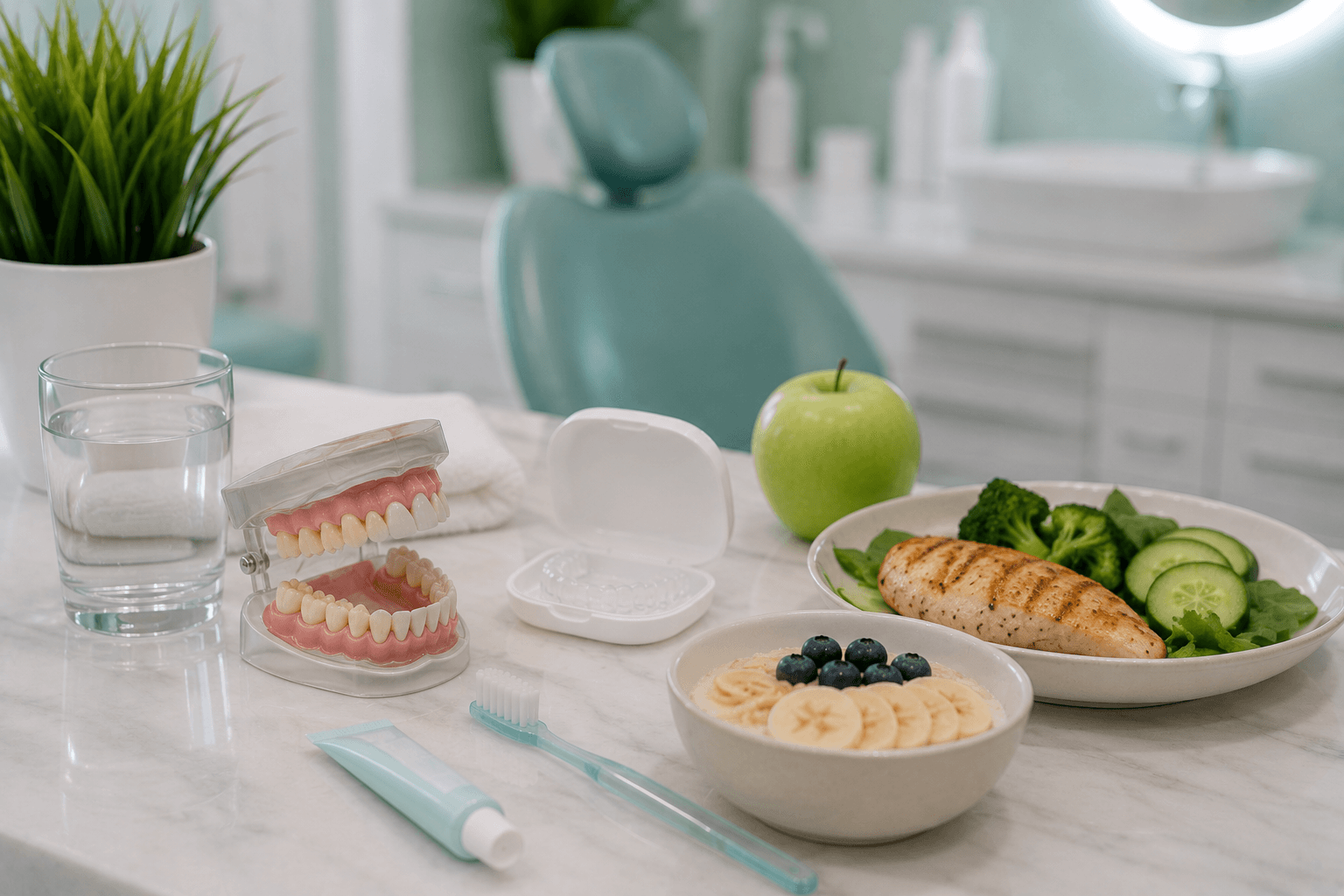
The first day or two matter most. Straight after treatment, your teeth are more open to picking up colour than usual, so this is the window where a little care goes a long way. Sticking to lighter-coloured foods and drinks for the first day or so — think of it as a "pale menu" — helps your new shade settle in. That means going easy on coffee, red wine, dark sauces, curries, and anything with strong colouring for a short while.
Be mindful of the usual suspects afterwards. Once that initial window has passed, you can go back to normal, but the drinks and foods that stained your teeth before will gradually do so again if you let them. Rinsing with water after a coffee, or using a straw for darker drinks, are small habits that quietly protect your result over time without asking much of you.
Keep up a good routine. Regular, thorough brushing and the usual dental basics keep everyday staining from getting a fresh grip. Nothing exotic — just consistency. A whitening toothpaste can help maintain things between visits, working gently on the surface staining that tries to creep back.
Consider an occasional top-up. Because staining is an ongoing part of life, many people choose to have a maintenance session from time to time to refresh their shade. How often is entirely up to you and depends on your lifestyle. Someone who avoids the main staining culprits may go a long stretch between visits; a committed coffee drinker might like to keep on top of it more regularly.
Think of your result less like a one-off event and more like something you can maintain with very little effort once you understand what's affecting it.
Frequently asked questions about Teeth Whitening results
It depends on where you're starting and what's causing your staining, which is exactly why we measure your shade against a professional guide before we begin. If you want a broader overview of common concerns, you can read LA Teeth Whitening chelmsford FAQs. Most people move several shades lighter in a single session, but we'll give you a realistic figure for your own teeth rather than a blanket promise.
For most people, no. You might feel a little mild sensitivity during or shortly after, particularly if your teeth are already on the sensitive side, but it's usually short-lived and settles within a day or so. There are no needles and no drilling involved.
That varies from person to person, because it depends heavily on your diet, whether you smoke, and how well you keep up your routine afterwards. With sensible aftercare and the occasional top-up, results can stay looking fresh for a good while.
The treatment is designed to work on staining without harming the structure of your teeth. Any temporary sensitivity that some people notice generally passes quickly. As with anything, it's best carried out properly with your particular teeth taken into account.
No. Whitening only changes the colour of natural tooth enamel. Crowns, veneers, bonding, and fillings keep the shade they already are. If you have visible dental work at the front, we'll talk you through what to expect so the result matches your expectations.
Often, yes, but it's worth flagging up beforehand so it can be managed carefully. Sensitivity doesn't automatically rule you out; it just means we take a little extra care with your particular teeth, and there are simple steps that can reduce it.
It's wise to allow a little time rather than leaving it to the day before, so your shade has had a day or two to settle and you feel completely comfortable. If you have a big occasion coming up, planning slightly ahead takes the pressure off.
That's the aim. Whitening lifts away staining to reveal a brighter version of your own natural shade, so the result looks like a cleaner, healthier smile rather than something artificial or overdone.
Against a professional shade guide. We record your shade before we start and check it again at the end, so the change isn't a matter of opinion or a trick of the light — you can see exactly how many shades you've moved.
Yes. They come from ordinary cases with everyday staining, and the lighting is kept consistent between the before and after shots so you're seeing an honest comparison rather than a flattering trick.
Straight after whitening, your teeth are rehydrating, and the shade can settle a little over the following day or two. This is completely normal, and what you're left with is your true, stable result.
You'll usually see a visible change within the same session — we compare your shade against the guide at the end so you can see the shift for yourself. The final settled result becomes clear over the next day or two.
Not quite. Surface staining from food, drink, and smoking tends to respond very well. Deeper, intrinsic discolouration can be more stubborn, so it may lift more gradually. The honest answer for your own teeth comes from looking at them and checking the shade first.
You can, but the first day or two is when your teeth are most likely to pick up fresh colour, so it's worth sticking to lighter foods and drinks for a short while. A little care in that early window helps your new shade settle and hold.
Whitening brightens your natural teeth fairly evenly, so it isn't a targeted fix for a single tooth that's darker because of an old injury or an internal change. If one tooth stands out for a specific reason, that's worth discussing on its own, as it may call for a different approach.
None to speak of. You can go straight back to your day. The only things to keep in mind are that early window where lighter foods and drinks protect your fresh result, and any mild sensitivity, which tends to settle quickly.
Whitening focuses on the teeth that show when you smile, since that's what makes the visible difference. The surfaces people actually see are the ones that matter for the result, and those are the focus of the session.
In your own time
If you've read this far, you're clearly giving your smile some proper thought — and that's exactly the right way to approach it. There's no rush and no pressure here. Teeth Whitening is a small, sensible step, but it should be one you feel genuinely comfortable with.
The results on this page all began with someone in much the same position as you: unsure whether it would work for their teeth, a little tired of hiding their smile, and curious enough to find out. What they had in common wasn't perfect teeth. It was ordinary staining, an honest starting shade, and a result that finally matched how they wanted to feel.
Understanding the treatment tends to be the thing that settles most people's minds. Once you know why teeth stain, how the process works, what results are realistic, and how to keep them, the decision stops feeling like a leap into the unknown and starts feeling like a straightforward choice.
Whenever you're ready to learn more or ask a question of your own, the door is open and the conversation is always a relaxed one.